Runners Train on Flat Terrain to Avoid Late-Race Fatigue
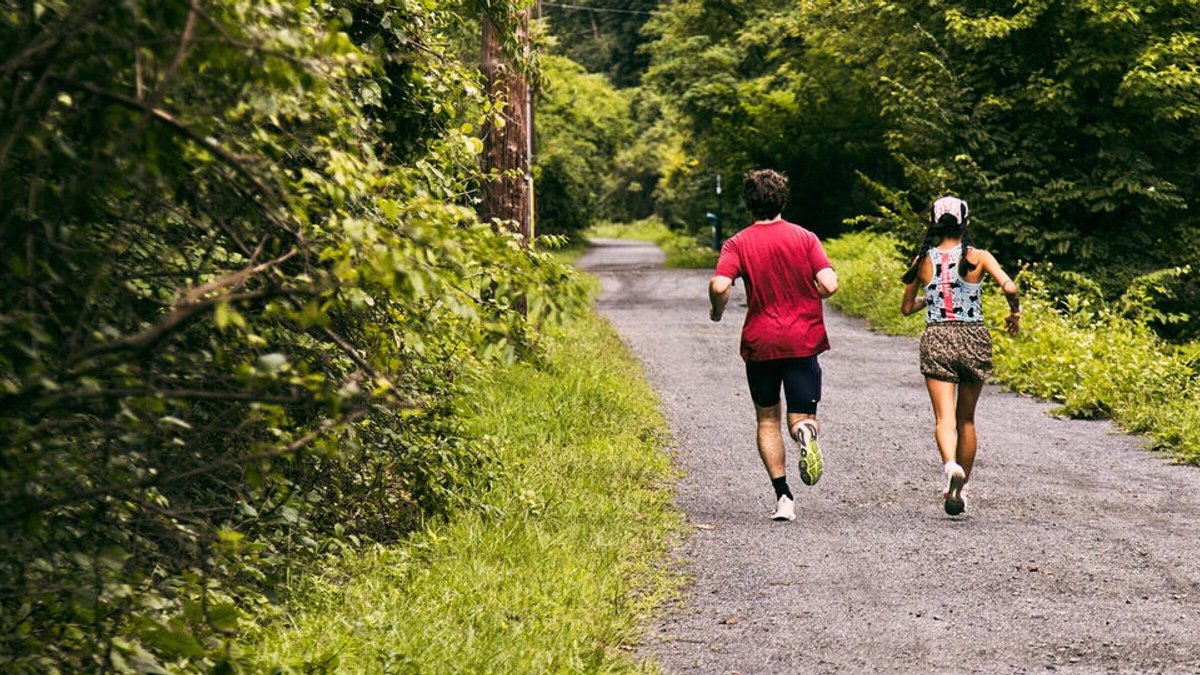
Flat marathons may seem like an easy path to a personal record, with no hills to hinder your pace. However, these courses can be surprisingly challenging without proper preparation. While they lack elevation changes, flat marathons require runners to maintain a consistent rhythm, which can lead to fatigue if not trained for effectively.
A course with few elevation changes gives runners fewer forced resets. An ambitious pace may feel comfortable in the opening miles of a flat marathon. But after hours of the same stride pattern and muscle use, fatigue can definitely sneak up on you.
Flat courses are not inherently tougher than hilly ones, explains Janet Hamilton, CSCS, an exercise physiologist and founder of Running Strong in Atlanta. But they do demand something different from the body: can you hold a sustainable rhythm without relying on the terrain to keep your effort in check?
The goal of your training should be to answer this question with a confident yes. To find out how runners can get there, we spoke with three experts for the key strategies you need on your plan when training for a flat marathon.
Prioritize Flat Terrain for the Workouts That Matter Most
You don’t need to turn every run into a pancake-flat outing to prepare adequately for a flat marathon. The point is to make the training sessions that most closely resemble race day look more like race day.
“When I was running professionally, we always wanted to train on the type of terrain that we were going to be racing on,” says Jon Mott, a three-time U.S. Olympic Marathon Trials qualifier and founding coach of Runnersfix. For flat marathons, he coaches his runners with the same philosophy: put marathon-pace workouts and long runs on flatter routes.
Mott recommends one of these sessions per week. For example, if you have both a marathon-pace workout and a long run on your schedule every week, alternate a flatter marathon-pace session one week with a flatter long run the next, keeping the other workout on whatever terrain you choose.
This approach gives runners a chance to practice sustaining their effort without the natural shifts that come with rolling terrain. Hamilton agrees, suggesting long runs on flat ground are especially helpful for runners with a time goal for their race.
Most runners should make a conscious shift toward prioritizing flat terrain at least eight weeks before race day, says Daren Lake, a Sydney-based VDOT- and Australian Athletics-certified run coach. Those chasing a major qualifying time or an ambitious PR may want to start prioritizing flat routes 12 to 13 weeks out, while still keeping some hill work in the rotation.
The exact timing varies by athlete, but the shared principle is simple: save your flattest routes for your longest runs and your most race-specific workouts.
Flat Courses Demand Rhythm Control
The first issue less-experienced marathoners experience on flat courses is often pacing, Lake explains. Runners go out too fast because the effort “feels fine,” then realize somewhere around miles 10 to 15 they’ve spent too much energy.
This mistake can set off a snowball effect. First comes the physical discomfort. Then comes the mental spiral: you’re still moving forward, still seeing the same road, and still going the same pace, but that pace no longer feels as sustainable as it did when you started.
Hamilton suggests adding targeted marathon-pace blocks within flat long runs to help you dial in both pace and effort in your training, so you’re less likely to go out too fast on race day.
For example, if you’ve worked up to a 16-mile long run, run the first six at a normal easy effort, then the next six at goal marathon pace — aiming to stay within five to seven seconds per mile of your target — before slowing back to easy pace to finish the run. That gives you a chance to practice the steady rhythm of a flat course on legs that are already warm and a little fatigued, without turning the entire long run into a race.
“The more you drill the pacing and terrain into your neuromuscular system, the more natural it feels on race day,” Lake says. “Boring habits, nothing flashy.”
For runners targeting specific times, this repetitive pacing practice becomes essential. A flat course strips away the natural cues that rolling terrain provides — the brief recovery on downhills, the rhythm shifts on climbs. Without those built-in resets, maintaining even effort requires deliberate training. The body learns to settle into a metronomic cadence, conserving energy through consistency rather than variation.
Hills Still Play a Supporting Role
Strategically leveraging flat-ground running in training does not mean you should avoid hills at all costs. In fact, all three experts agree runners actually benefit from keeping them in their training plan, even with a flat race as the end goal.
Hamilton says hill running can build lower-body strength, with uphills boosting the glutes and downhills challenging the quads. Mott keeps hills in his athletes’ programs in the first month or so of the marathon build, when the goal is to develop general strength and fitness rather than dive into course-specific training.
To maintain hill training, keep inclines in easy runs, choose a rolling route once or twice a week, or add a few short hill reps after an easy session. Mott favors short, 10- to 15-second hard uphill intervals for runners who need a low-risk way to build strength without turning the workout into another hard day.
Lake similarly recommends running a hill workout about every other week. The specific session can vary — from short, hard repeats to longer threshold efforts — but the key is to treat hills as supplemental work, rather than the centerpiece of your most marathon-specific training.
Training for a flat marathon in a hilly area might mean you have to get creative in your running routes, and you may have to accept that your best flat-ground route may not be the most scenic one.
Finding Practical Flat Training Routes
Lake’s first choice of route for a flat run is a repeated short loop or out-and-back. While he acknowledges that the repetition might come across as “boring,” it also gives runners a chance to practice the mental side of a flat marathon. Rather than seeing the same stretch of road as a drawback, you can use it as a cue to check in on your pace and effort level.
A track can work, too, especially for controlled marathon-pace sessions. But Lake recommends using it selectively because its softer surface does not fully mimic the asphalt or concrete of most road marathon routes. Treadmills are another option, particularly for runners dealing with extreme weather conditions or a shortage of safe flat routes in their area.
Hamilton and Mott are cautious about relying too heavily on treadmill running, since the moving belt and softer surface do not fully recreate the impact and fatigue management demands of running outdoors. If you must use the treadmill, rather than setting the belt at zero, Lake favors using a slight incline, around 0.5 to 1 percent, to mimic the resistance of outdoor running on flat ground.
The practical takeaway: use the flattest option you can access consistently. A short out-and-back you can repeat every week will do more for your preparation than a perfect route that is too far away to run on consistently.
If your marathon is only a couple of weeks away, don’t try anything new. The time to build familiarity with a flat course is in the middle of your training cycle. By the taper, trust the work you have done. Stick to the routines, routes, and workouts your body already knows, and use the remaining time to arrive at your race rested rather than trying to make up for a perceived gap in your preparation.
A flat marathon will not reward a heroic rescue attempt during the taper. It rewards the discipline to let your training show up on race day. The runners who succeed on these courses are those who spent months practicing the unglamorous skill of holding steady pace through monotony, logging repeated loops, drilling marathon miles on flat ground, and building the mental fortitude to chase the same effort level for 26.2 miles without the terrain doing any of the work for them.


